In Matthew 7:7, Jesus tells his listeners to ask, seek, and knock. He promises that they will receive, find, and see the door open. People often lift the verse out and read it as a guarantee that God will grant any request. Read the whole paragraph, though, and you see that Jesus explains his promise with a picture: a father whose child asks for bread. The promise rests on what kind of Father God is, and on what he counts as good.
In short
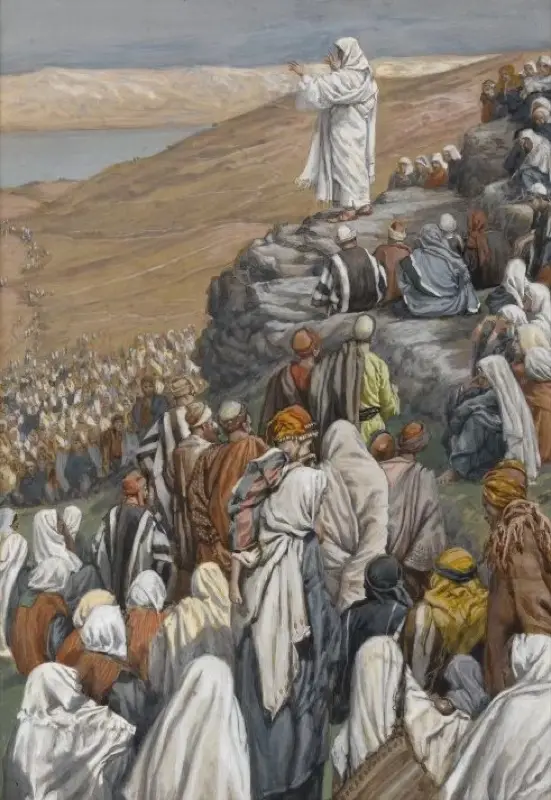
Matthew 7:7-11 sits near the end of the Sermon on the Mount, the teaching that runs through Matthew 5 to 7.
Ask, seek, and knock describe steady, ongoing prayer, and verse 8 offers the promise to everyone who asks.
Jesus grounds the promise in a father who gives his child bread, not a stone (Matthew 7:9-11).
The passage promises good gifts from a wise Father. It does not promise every item on your list.
What does ask and it will be given mean in Matthew 7?
Start with the five verses together. Jesus gives three short commands, repeats them as a general rule, and then tells a small story about parents and children. The story is his explanation. Without it, the first verse can sound like a vending machine. With it, the first verse sounds like an invitation from a parent.
7“Ask, and it will be given to you; seek, and you will find; knock, and it will be opened to you.
8For everyone who asks receives, and the one who seeks finds, and to the one who knocks it will be opened.
9Or which one of you, if his son asks him for bread, will give him a stone?
10Or if he asks for a fish, will give him a serpent?
11If you then, who are evil, know how to give good gifts to your children, how much more will your Father who is in heaven give good things to those who ask him!
Look at the order. Verse 7 gives the commands. Verse 8 widens the promise to everyone who asks, seeks, and knocks. Then verses 9 and 10 ask two questions that answer themselves. No father hands his hungry son a stone when he asks for bread. No father gives him a snake when he asks for a fish.
Verse 11 draws the conclusion. If ordinary parents, flawed as they are, know how to give good gifts, the Father in heaven will give good things to those who ask him. Jesus argues from the lesser to the greater. Your own experience of a decent parent is the small version. God is the large one.
Why does Jesus use three verbs?
Ask, seek, and knock each picture prayer from a slightly different angle. Asking is a request made with words. Seeking suggests effort and attention, like looking for something you have lost. Knocking pictures someone standing at a closed door, waiting for it to open.
Many readers note that the Greek verbs in verse 7 carry a sense of continuing action. You could paraphrase the line as keep asking, keep seeking, keep knocking. That fits the rest of the Gospels. In Luke 18:1-8, Jesus tells a parable about a widow who keeps coming back to a judge, and Luke says the point is that people ought always to pray and not lose heart.
So the three verbs do not form a technique with three steps. They describe a person who keeps coming back. The promise in verse 8 meets that person: the one who asks receives, the one who seeks finds, and someone opens the door to the one who knocks.
What do the bread and the stone show?
The examples in verses 9 and 10 are everyday food. A round loaf could look a little like a stone. A fish could look a little like a snake. A cruel parent could hand over something that resembles the request but harms the child. Jesus says no ordinary parent would do that.
This tells you two things. First, God will not mock you when you ask. You will not get a stone dressed up as bread. Second, the parent decides what counts as bread. A child might ask for something that would hurt him, and a good father says no because he is good, not in spite of it.
Read the passage beside what Jesus has already said about prayer. In Matthew 6:7-8, he tells his listeners not to pile up empty words, because their Father knows what they need before they ask. Then he teaches them the prayer that asks for daily bread in Matthew 6:11. The guide to the Lord's Prayer, one line at a time walks through that request. Matthew 7:7-11 picks up the same thread: you ask a Father who already knows, and who gives bread.
The surrounding verses matter too. Matthew 7:12 follows right after, with the rule to treat others the way you want them to treat you. The God who gives good gifts expects his children to give good things to the people around them. If you want to practice reading a verse with its neighbors, the post on Bible verse context shows how.
Is this a promise to get whatever you ask for?
Verse 11 answers the question in its own words. The Father gives good things. He is the judge of what is good, not the person asking. That is a real promise, and a generous one, but it does not cover every request.
Luke records a close version of the same teaching, and he ends it in a striking way.
11What father among you, if his son asks for a fish, will instead of a fish give him a serpent;
12or if he asks for an egg, will give him a scorpion?
13If you then, who are evil, know how to give good gifts to your children, how much more will the heavenly Father give the Holy Spirit to those who ask him!”
Where Matthew says good things, Luke names the Holy Spirit. Luke's wording suggests that the best gift God gives is himself, his own presence with the person who asks. Read together, the two Gospels point past a list of items to a relationship with the Giver.
The rest of the New Testament shows people who asked and heard no. In Matthew 26:39, Jesus himself asks in Gethsemane that the cup pass from him, and then he yields to his Father's will. In 2 Corinthians 12:7-9, Paul asks three times for relief from a thorn in the flesh and hears instead that God's grace is enough. James 4:3 adds that some requests fail because people ask with wrong motives.
None of that cancels Matthew 7:7. It shows what the promise looks like in real lives. God answers, and he answers as a Father who gives good things.
How can you pray with this passage today?
Start where Jesus starts: ask. You do not need polished words. Matthew 6:8 says your Father knows what you need already. Bring the request you actually have, even if it feels small.
Then keep going. If the answer does not come right away, the verbs in verse 7 invite you to return. Seeking might look like reading Scripture with your question in mind. Knocking might look like praying the same request again tomorrow.
Hold your request with open hands. Jesus' own prayer in Matthew 26:39 shows that you can ask boldly and still trust your Father's will. If the answer turns out different from what you asked for, verse 11 gives you a way to read that: the Father still gives good things.
A few practical steps can help:
- Read Matthew 7:7-11 slowly, then read Matthew 6:5-13 to hear what Jesus said about prayer just before.
- Write down one request in plain words.
- Return to it over the next few days, and note what changes in the request or in you.
- Read Matthew 6:33 alongside it. The post on seeking first the kingdom of God shows how Jesus orders our wants.
The passage does not ask you to earn a hearing. It asks you to come, the way a hungry child comes to a parent at dinnertime. For more on bringing worries to God in prayer, see Philippians 4:6-7 on prayer and peace.