Reading the Bible with kids goes better in small, whole pieces than in long stretches. Choose one complete scene, read it aloud, ask a question or two, and stop while your children still want more. Deuteronomy 6:6-7 pictures parents talking about God's words at home, on the road, at bedtime, and in the morning. Mark 10:13-16 shows Jesus welcoming children his disciples tried to turn away. Neither passage asks a child to listen like an adult.
In short
Start with one short scene that has a beginning, a middle, and an end, not a full chapter.
Ask questions that fit your child: who and what for little ones, why and how for older kids.
Deuteronomy 6:7 places this teaching in ordinary moments: sitting at home, walking, lying down, and getting up.
In Mark 10:14, Jesus tells his disciples not to hinder the children. A wiggly listener is still welcome.
How do you start reading the Bible with kids?
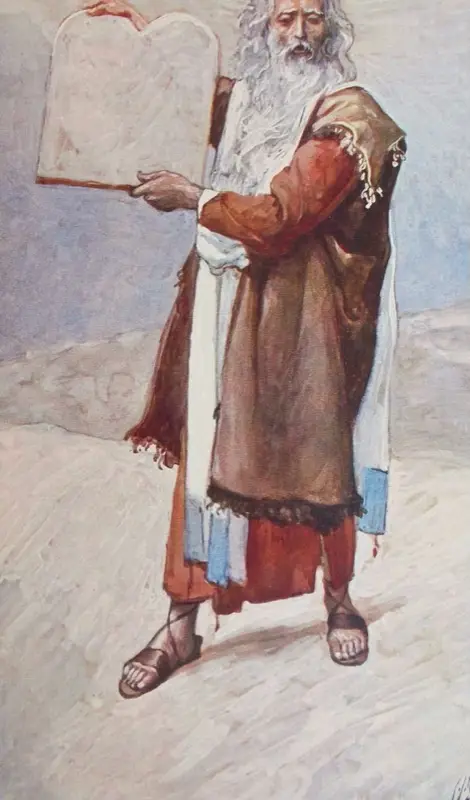
Start with yourself. In Deuteronomy 6:6, Moses tells Israel that these words belong on their own hearts first. Teaching children comes next, in verse 7. You don't need to be an expert before you open the book with your kids. It helps, though, to read the passage once on your own so you know where the scene goes.
6And these words that I command you today shall be on your heart.
7You shall teach them diligently to your children, and shall talk of them when you sit in your house, and when you walk by the way, and when you lie down, and when you rise.
Notice the four settings in verse 7. Sitting in the house, walking along the road, lying down, and rising up cover most of a family's day. The verse doesn't name a schedule or a length. It pictures talk about God's words in the times you already spend together. For many families that means a few minutes at breakfast, a story at bedtime, or a question in the car.
Pick one of those moments and keep it. A rhythm you can return to most days will carry further than a long session you dread. If you want help choosing a time of day, the post on the best time to read the Bible walks through the options.
Why do short, complete scenes work better than chapters?
Chapters vary a lot in length, and many of them hold several stories at once. Mark has 16 chapters, and a single one can move from a healing to a parable to a storm. A child who hears all of that in one sitting may lose the thread. A child who hears one scene can usually tell it back to you.
A good scene for kids has people in it, something happens, and it ends. Here are a few to start with.
| Scene | Passage | A first question |
|---|---|---|
| God makes the world | Genesis 1 | What did God make first? |
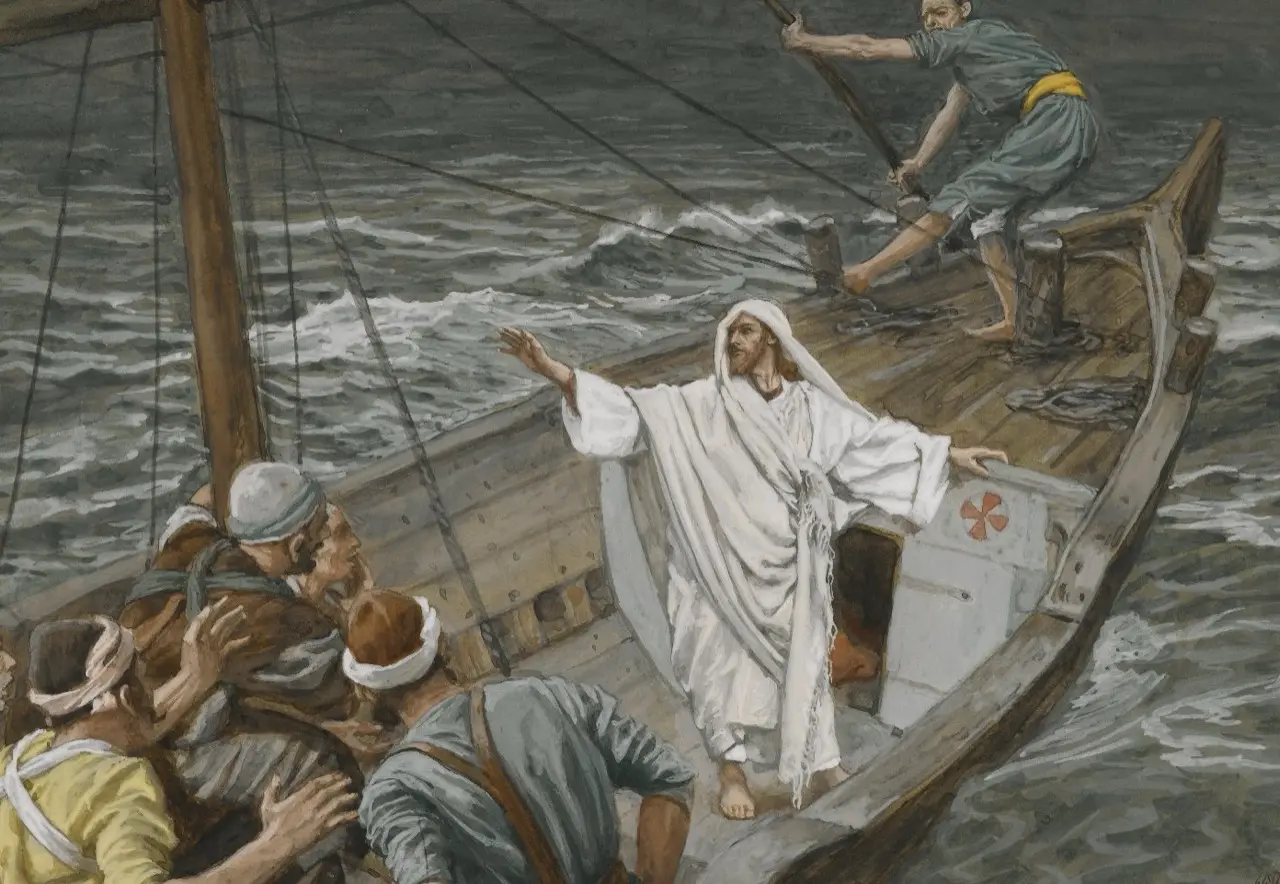
| Jesus calms the storm | Mark 4:35-41 | How did the disciples feel in the boat? |
| Jesus welcomes children | Mark 10:13-16 | Why did Jesus want the children near him? |
| Blind Bartimaeus calls out | Mark 10:46-52 | What did Bartimaeus ask Jesus for? |
| The lost sheep | Luke 15:3-7 | What did the shepherd do when he found the sheep? |
| Zacchaeus climbs a tree | Luke 19:1-10 | What changed for Zacchaeus after Jesus came to his house? |
Short, complete scenes that work well read aloud
Some whole books are short enough to read as one story over a week. Ruth has 4 chapters and Jonah has 4 chapters. You could read one chapter a night and finish either book in four evenings, with room left for questions.
When a scene runs long, stop at a natural break and pick it up the next day. Tell your kids where you stopped. Children often remember a cliffhanger better than you do.
What questions should you ask kids about a passage?
Match the question to the child. Little ones do well with questions they can answer from the story itself: Who was there? What happened? What did Jesus say? These help them hold the scene in mind.
Older kids can go further. Try questions like these:
- Why do you think he did that?
- How would you feel if you were in the story?
- What does this scene show us about God?
- What part surprised you or puzzled you?
The last question matters most. Let your kids ask their own questions, and take them seriously. If you don't know an answer, say so, and look it up together. That shows them that Scripture is something you read and think about, not something you already have figured out.
Keep it short. One or two questions are enough on most days. If a conversation takes off, follow it. If it doesn't, close the book and try again tomorrow. For more on guiding children without expecting a guaranteed result, see what Proverbs 22:6 means.
What does Jesus' welcome of children show?
Mark 10:13-16 is one of the best scenes to read with kids, because it is about them. People bring children to Jesus so he can touch them. The disciples scold the people who brought them. Jesus sees it and gets angry with his own disciples, not with the children.
13And they were bringing children to him that he might touch them, and the disciples rebuked them.
14But when Jesus saw it, he was indignant and said to them, “Let the children come to me; do not hinder them, for to such belongs the kingdom of God.
15Truly, I say to you, whoever does not receive the kingdom of God like a child shall not enter it.”
16And he took them in his arms and blessed them, laying his hands on them.
In verse 14, Jesus tells the disciples to let the children come and not to stand in their way. He says the kingdom of God belongs to people like them. In verse 15 he goes further: anyone who does not receive the kingdom like a child will not enter it. Then, in verse 16, he takes the children in his arms, lays his hands on them, and blesses them.
Readers understand what it means to receive the kingdom like a child in a few ways. Many see trust and dependence in it, since children receive what they are given. Others stress humility, because children in that world had little standing. The scene supports each of these, and you don't have to settle the question to share it with your kids.
What the scene does make clear is that Jesus wanted the children close. He did not ask them to sit still first or prove they understood. That can shape how you read with your own kids. A child who fidgets, interrupts, or asks the same question twice is still a child Jesus welcomed. Your family reading time doesn't need to look like a quiet adult study to be worth doing.
How do you keep a family reading rhythm going?
Listening aloud is a good fit for families. Kids who can't read yet can still hear the whole scene, and kids who can read may enjoy following the words. Deuteronomy 6:7 mentions walking by the way, and a car ride or a walk to school can serve the same purpose today. The post on listening to the Bible while driving has a few ideas for that.
Choose a direction so you aren't deciding every night. You might read through Mark one scene at a time, then move to the stories in Genesis. If you want a structure for yourself alongside the family reading, a Bible reading plan for beginners gives you a first month, and what order to read the Bible in compares a few ways to begin.
Expect missed days. Illness, travel, and late nights will interrupt any plan. When that happens, pick up at the next scene and don't make up the backlog. Your kids will remember the stories you shared more than the days you skipped.
Last, let them see you read on your own. Deuteronomy 6:6 puts the words on the parent's heart before verse 7 puts them in the parent's mouth. Children notice what you return to.