The Bible is one book made of many kinds of writing. It holds stories, songs, sayings, visions, parables, and letters to real churches, and each kind works in its own way. A psalm doesn't talk like a letter, and a story doesn't give orders the way a law does. Once you know what kind of writing you're reading, you know what question to ask it.
In short
The main genres of the Bible include narrative, poetry, prophecy, parables, and letters. Each one calls for a different first question.
Narrative reports what people did. It often shows a choice without approving it.
Poetry speaks in images. Psalm 19:1-4 says the sky speaks, yet it uses no words.
A parable makes one main point through a short story. In Luke 8:9-10, even the disciples need to ask what one means.
What are the main genres of the Bible?
Genre means the kind of writing a passage is. You already read this way. You don't read a recipe like a news report, or a birthday card like a contract. The Bible asks the same of you.
| Genre | Where you find it | A question to ask |
|---|---|---|
| Narrative | Genesis, Samuel, Kings, the Gospels, Acts | What happened, and how does the writer show what he thinks of it? |
| Poetry | Psalms, Proverbs, Job, Song of Songs | What picture is the poet using, and what feeling does it carry? |
| Prophecy | Isaiah, Jeremiah, Ezekiel, the Twelve | Who first heard this, and what was God calling them to do? |
| Parable | Jesus' teaching in the Gospels | What one point does the story turn on? |
| Letter | Romans through Jude | What problem in this church is the writer answering? |
Five common kinds of biblical writing and a first question for each
Many books mix these. The Gospels are narrative but hold parables, and the prophets often write in poetry. So name the genre paragraph by paragraph, not only book by book. The guide on how to study the Bible shows how to observe a passage before you decide what it means.
How do you read a Bible story?
A story tells you what happened. It does not always tell you to do the same thing. In Genesis 27, Jacob tricks his blind father to get a blessing, and the chapters that follow show what it cost him. Nobody reads that chapter as advice.
Writers often let events speak for themselves, and sometimes they add a short comment. Judges ends by saying that everyone did what was right in his own eyes (Judges 21:25). That line tells you how to read the chaos in the chapters before it.
So ask what the writer wants you to notice. Look for where God speaks or acts. Look for repeated words. Watch whether the people in the scene come out well or badly. A reported event is a window into what happened. It is not always a door to walk through.
How do you read poetry in the Bible?
Hebrew poetry often says a thing twice in different words. The second line echoes the first, sharpens it, or answers it. Psalm 19 opens this way.
1The heavens declare the glory of God, and the sky above proclaims his handiwork.
2Day to day pours out speech, and night to night reveals knowledge.
3There is no speech, nor are there words, whose voice is not heard.
4Their voice goes out through all the earth, and their words to the end of the world. In them he has set a tent for the sun,
The heavens declare, and the sky proclaims: two lines, one thought. Then verse 3 says there is no speech and there are no words, yet verse 4 says their voice goes out through all the earth. Read as flat statements, those lines contradict each other. Read as poetry, they make sense. The sky tells about God without using any language.
Poems also use pictures. Psalm 91:4 says God covers you with his feathers. No one takes that to mean God has wings. The image is about shelter. So ask what the picture is, what it makes you feel, and what it says about God. For more, see what a psalm is.
How do you read a parable?
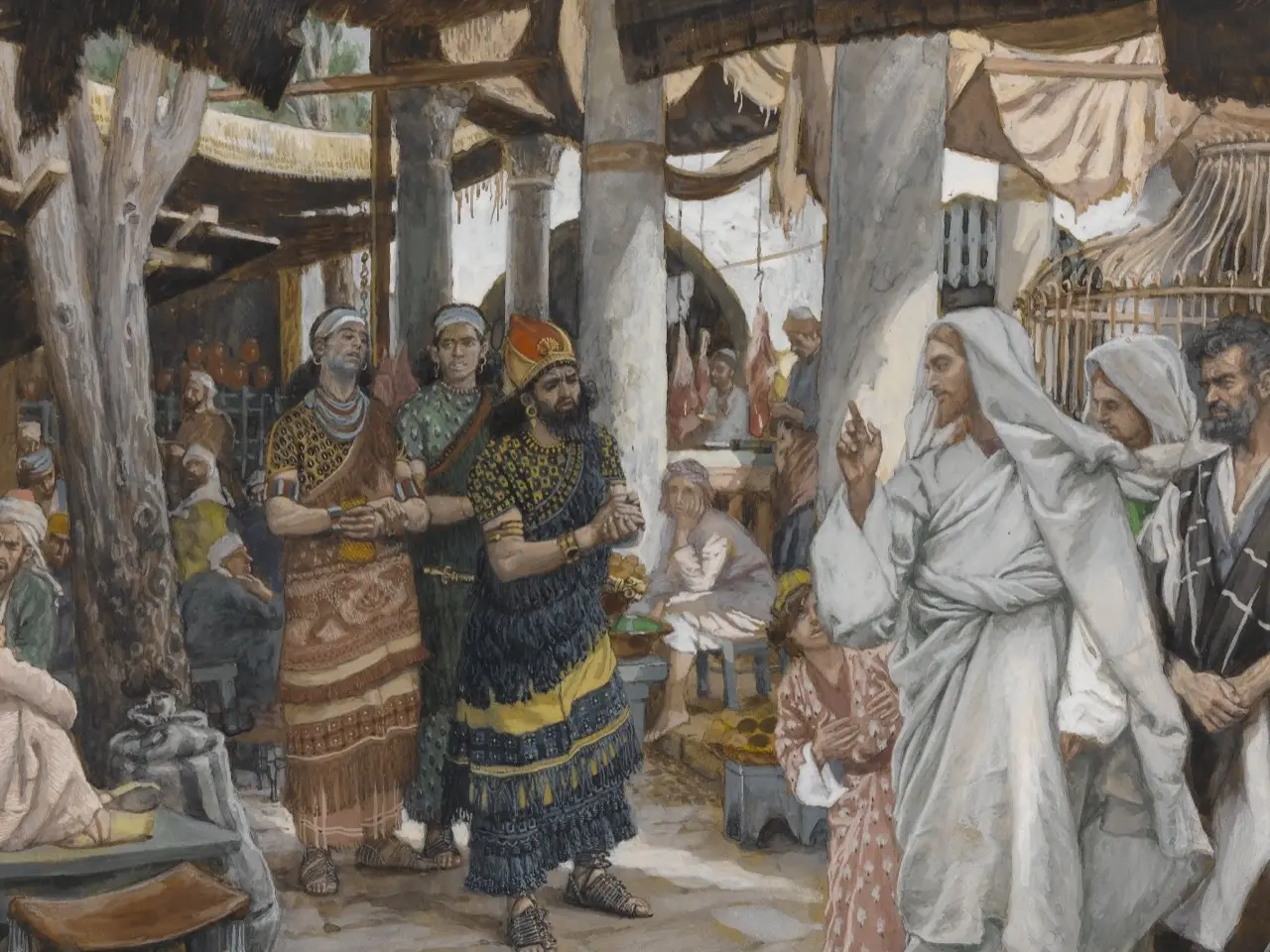
A parable is a short story Jesus tells to make a point, often with a twist that catches the listener. In Luke 8, Jesus tells of a sower whose seed falls on four kinds of ground. His own disciples don't follow it, so they ask him what it means.
9And when his disciples asked him what this parable meant,
10he said, “To you it has been given to know the secrets of the kingdom of God, but for others they are in parables, so that ‘seeing they may not see, and hearing they may not understand.’
Jesus answers with words from Isaiah 6:9. He says parables open the meaning to some and hide it from others. Christians read that hard saying in more than one way, but most agree that a parable invites you to lean in and ask. Then, in Luke 8:11, Jesus explains that the seed is the word of God.
Look for the one main point before you hunt for meaning in every detail. Then notice the setting, because Luke often gives it. Luke 18:1 says Jesus told a parable so his followers would keep praying and not lose heart.
How do prophecy and letters work?
Prophecy is God's message to his people through a prophet, usually for a real moment in their history. Much of it calls Israel back to faithfulness, and much of it is poetry. Isaiah 55:12 pictures the trees clapping their hands. That is a picture of joy, not a forecast about trees.
The first question is who heard it first. Jeremiah 29:1 says the chapter is a letter to exiles in Babylon. That is why Jeremiah 29:11 reads best as a promise to those exiles before you ask what it means for you. Christians differ on how some prophecies are fulfilled, and those questions deserve care.
A letter is like one side of a phone call. In 1 Corinthians 7:1, Paul says he is answering matters the Corinthians wrote to him about. You hear only his half, so read the whole letter to piece together the question. Some lines belong only to that moment. In 2 Timothy 4:13, Paul asks Timothy to bring the cloak he left at Troas. Nobody hears that as a command to fetch a coat.
When does a passage tell you what to do?
Not every verse is a command, and not every command was given to you. Some passages tell you what to do. Many show you who God is, what people did, or how a poet felt. A few habits help:
- Name the genre before you look for a lesson.
- Ask who first heard it. Then ask what has changed between them and you.
- Look for plain teaching elsewhere. A story about lying makes more sense next to a clear word about honesty.
- Let an image stay an image. A picture can be true without being literal.
Next, read the verse with the paragraph around it. The guide to Bible verse context shows how. Start with one passage this week. Name its kind, ask its question, and see what you notice.