This Psalm 23 small group study is for a leader who wants to spend one meeting on a psalm most people think they already know. Plan on 45 to 60 minutes. Read Psalm 23:1-6 aloud before you start. Then ask a second person to read it again at a slower pace. The psalm is short, and a second reading gives people a chance to hear lines that slid past the first time. Familiar words tend to do that.
In short
In verses 1 to 4 the LORD is a shepherd, and in verse 5 he is a host who sets a table.
In verse 4 the psalm stops talking about God and starts talking to him, right in the dark valley.
The psalm does not skip the valley. The shepherd walks through it with the sheep.
Verse 6 ends with goodness and mercy following the psalmist for all the days of a life.
Before you read
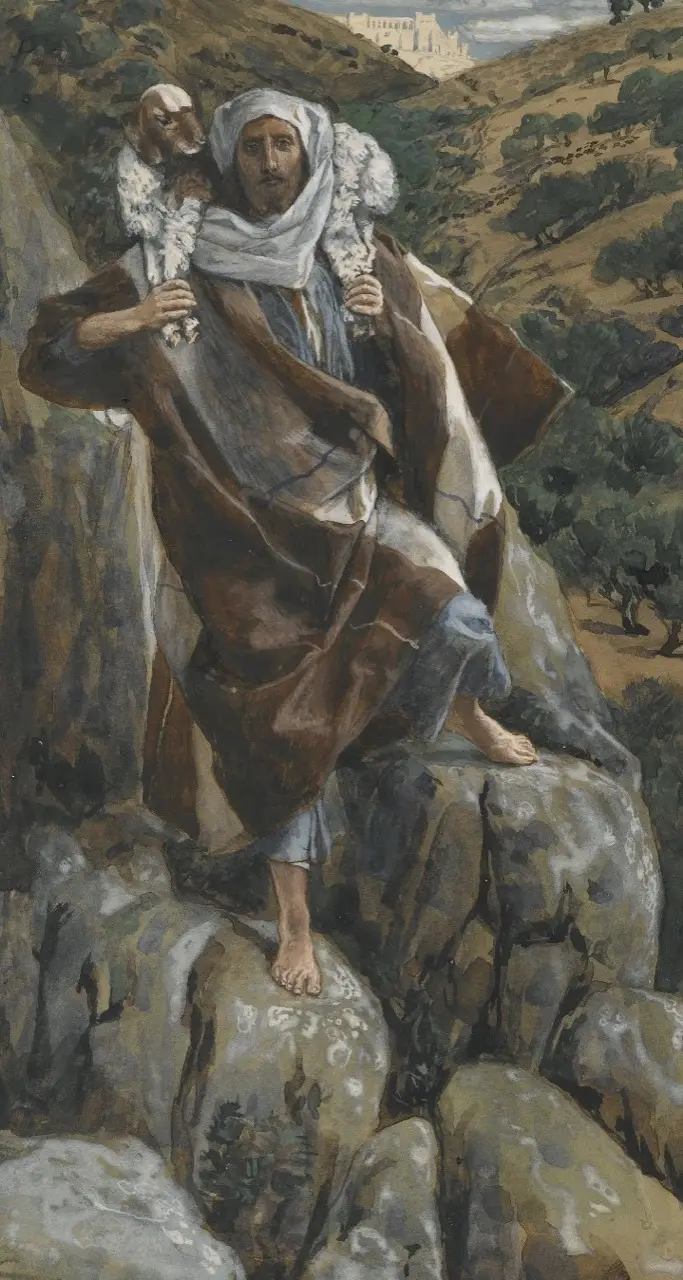
The heading of the psalm names David. Many readers take it as David's own prayer, and others read the heading as a dedication or a link to his collection. Either way, the picture fits David's life. He kept his father's sheep before he ever held a crown (1 Samuel 16:11), and he told Saul about fighting off a lion and a bear to protect the flock (1 Samuel 17:34-35).
Shepherd was also a common word for a king in the world of the Bible. In Ezekiel 34, God speaks against Israel's leaders as bad shepherds who fed themselves and left the flock to scatter, and he says he will search for his sheep himself (Ezekiel 34:11). So when the psalmist calls the LORD his shepherd, he is saying who looks after him and who rules over him at the same time.
It helps to know the neighbors. Psalm 22 opens with a cry of abandonment (Psalm 22:1). Psalm 24 pictures the King of glory coming through the gates (Psalm 24:7). Psalm 23 sits between the cry and the king, a quiet psalm of trust.
Christians often read it alongside John 10:11, where Jesus calls himself the good shepherd. Jewish readers pray it as a psalm of trust in the God of Israel. Both readings start from the same six verses. For a verse-by-verse walk through the whole psalm, see Psalm 23 meaning.
What to notice
1The Lord is my shepherd; I shall not want.
2He makes me lie down in green pastures. He leads me beside still waters.
3He restores my soul. He leads me in paths of righteousness for his name’s sake.
4Even though I walk through the valley of the shadow of death, I will fear no evil, for you are with me; your rod and your staff, they comfort me.
The shepherd does almost all the verbs. In verses 2 and 3 the shepherd makes the sheep lie down, leads, restores, and leads again. The sheep mostly receives. Verse 1 sums it up: with this shepherd, the psalmist lacks nothing he needs.
Rest comes first. Before any path or valley, verse 2 has green pastures and still water. The shepherd makes the sheep lie down. Rest here is something he gives, not something the sheep earns.
The reason sits in God's name. Verse 3 says the shepherd leads in right paths for his name's sake. The leading rests on who the shepherd is, not on how well the sheep follows.
The pronouns change in the dark. Verses 1 to 3 talk about the LORD as he. In verse 4, at the valley of the shadow of death, the psalmist starts speaking to God as you. The closest words in the psalm come at its darkest point. The valley is still there. What changes is the company.
The rod and staff bring comfort. Many commentators explain the rod as a club for driving off animals and the staff as a long crook for guiding sheep. One protects and one steers, and the psalmist finds both a comfort.
5You prepare a table before me in the presence of my enemies; you anoint my head with oil; my cup overflows.
6Surely goodness and mercy shall follow me all the days of my life, and I shall dwell in the house of the Lord forever.
The shepherd becomes a host. In verse 5 the scene moves to a table. The enemies have not left; the meal happens in front of them. Oil on the head and a full cup were signs of a generous welcome to a guest.
Goodness is not trailing behind by accident. In verse 6, goodness and mercy follow the psalmist all his days. Many scholars note that the Hebrew verb can also mean pursue. Some translations render the last line as dwelling in the LORD's house for length of days, and readers differ on how far into the future that line looks.
Discussion questions
- Reading verses 1 to 3 aloud, what does the shepherd do, and what does the sheep do?
- In verse 2 the shepherd makes the sheep lie down. Why might a sheep need to be made to rest, and what might that look like for a person?
- Verse 1 says the psalmist lacks nothing, yet verses 4 and 5 mention death and enemies. How do you hold those lines together?
- Verse 3 says the shepherd leads for the sake of his name. What difference does it make that the leading depends on who God is?
- Why do you think the psalm moves from talking about God to talking to God in verse 4, at the darkest point?
- What does it tell you that the psalm describes walking through the valley instead of going around it?
- How would you explain the rod and the staff to someone who has never watched a shepherd work?
- In verse 5 the enemies are still present while the table is set. What does that picture say about where God's care shows up?
- Which line of the psalm is hardest for you to say as your own right now, and what makes it hard?
- Where in your week would it help to remember that goodness and mercy follow you, as verse 6 says?
- Who do you know walking through a dark valley right now, and how could you keep them company?
Living it out this week
Pick one or two of these and try them before the next meeting.
- Read Psalm 23 aloud once each morning. Notice which line catches you, and notice if it changes from day to day.
- Name one place of rest in your week, a walk or a quiet meal, and receive it as the green pasture of verse 2 instead of rushing through it.
- Think of the person you named in question 11. Send a message, bring a meal, or sit with them for an hour. Verse 4 pictures company, and company is something you can offer.
- Write verse 4 on a card and keep it where you face a hard moment, such as your desk or your car.
Praying together
Give people a minute of quiet first. Then invite them to pray in their own words, using these prompts. Short prayers are welcome.
- Thank the LORD for a way he has led or provided for you, the way the shepherd does in verses 2 and 3.
- Pray for anyone in the group or beyond it who is in a dark valley right now, asking God to make his presence known to them, as verse 4 describes.
- Bring before God the line of the psalm that is hardest for you to trust today.
- Pray for the people who feel like enemies in your life, and ask for grace to sit at the table of verse 5 with them in view.
- Thank God for goodness and mercy you have seen following you, as verse 6 says.
If your group wants to stay in the Psalms next time, Psalm 139 pairs well with this one. It is another psalm that speaks directly to God and asks to be known. For help choosing what comes after that, see how to read the Psalms, and for a leader's guide built the same way as this one, try the John 4 study on the woman at the well.