A psalm is a song or poem from the Bible, written to be sung or prayed. Most psalms speak to God directly. Some speak about him to anyone who will listen. The book of Psalms gathers 150 of them, and they do not all sound alike. Some shout with joy. Some ask God why he feels far away.
In short
A psalm is a biblical song or poem. Most are prayers spoken to God, and many were sung in worship.
The book of Psalms has 150 chapters, more than any other book of the Bible, and each chapter is one psalm.
Psalms come in different kinds. Psalm 13 is a lament that begins with hard questions. Psalm 150 is praise from its first line to its last.
In the ESV text bundled in Berean, the book runs 43,184 words, about 288 words per psalm on average.
What is a psalm, in plain terms?
Start with the word. Our English word comes from a Greek word for a song sung to a stringed instrument. The Hebrew title of the book is usually translated as praises. So the name tells you two things: these are songs, and they belong to worship.
A psalm is also a poem. Hebrew poetry does not depend on rhyme. It works by setting lines next to each other. The second line often repeats the first in new words, sharpens it, or answers it. You can hear this in Psalm 150:1. One line calls for praise in the sanctuary, and the next calls for praise in the heavens.
Most psalms are prayers. In many books of the Bible, God speaks to people, or a narrator tells you what happened. In a psalm, a person speaks to God. Psalm 13:1 opens with a question aimed straight at him. You are reading someone else's prayer, and for centuries Jews and Christians have borrowed those words for their own.
What does a psalm of praise sound like?
Psalm 150 is the last psalm in the book, and it holds nothing back.
1Praise the Lord! Praise God in his sanctuary; praise him in his mighty heavens!
2Praise him for his mighty deeds; praise him according to his excellent greatness!
3Praise him with trumpet sound; praise him with lute and harp!
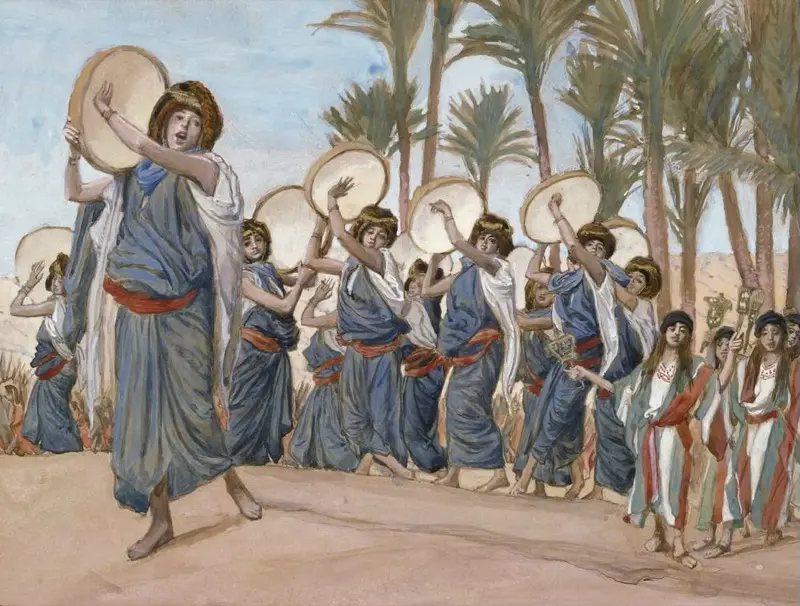
4Praise him with tambourine and dance; praise him with strings and pipe!
5Praise him with sounding cymbals; praise him with loud clashing cymbals!
6Let everything that has breath praise the Lord! Praise the Lord!
Notice how the psalm moves. Verse 1 tells you where to praise: in the sanctuary and in the heavens. Verse 2 tells you why: for what God has done and for how great he is. Verses 3 to 5 tell you how, and the list is loud. Trumpet, lute, harp, tambourine, dance, strings, pipe, and two kinds of cymbals all get a turn. Verse 6 tells you who: everything that breathes.
One command drives the whole psalm, and the psalmist repeats it in almost every line. There is no request here and no complaint. The psalm does not explain praise so much as do it, until the last line returns to the first.
If Psalm 150 were the only kind, you might think a psalm is always a happy song. The book does not let you think that for long.
What does a psalm of lament sound like?
Turn back to Psalm 13. It is short, and it starts in a very different place.
1How long, O Lord? Will you forget me forever? How long will you hide your face from me?
2How long must I take counsel in my soul and have sorrow in my heart all the day? How long shall my enemy be exalted over me?
3Consider and answer me, O Lord my God; light up my eyes, lest I sleep the sleep of death,
4lest my enemy say, “I have prevailed over him,” lest my foes rejoice because I am shaken.
5But I have trusted in your steadfast love; my heart shall rejoice in your salvation.
6I will sing to the Lord, because he has dealt bountifully with me.
The first two verses ask the same question four times. The psalmist feels forgotten. He feels that God has hidden from him, that sorrow fills every day, and that his enemy is winning. He does not soften any of it. Readers call this kind of psalm a lament: a prayer that brings pain and complaint to God in plain words.
Then the prayer turns. In verses 3 and 4 the psalmist asks for something. He wants God to look at him, answer him, and give light to his eyes. A lament is not a private sigh. It asks for help from the one who can give it.
Verses 5 and 6 turn again. The psalmist says he has trusted in God's steadfast love, and he says he will sing. The psalm does not tell you what changed between verse 4 and verse 5. It does not say the trouble ended. What you can see on the page is a movement in three steps: complaint, request, and trust.
That shape shows up in many psalms. Most laments follow this path toward trust. A few stay dark almost to the end, and Psalm 88 is the best-known example.
What do lament and praise have in common?
Put Psalm 13 and Psalm 150 side by side and they look like opposites. One begins by asking how long. The other begins and ends with a call to praise. But they share more than you might expect.
Both have six verses. Both speak in God's direction. Both use poetry instead of argument. And both end in song: Psalm 13:6 closes with a promise to sing, and Psalm 150 sings from start to finish. The lament reaches toward the place where the praise psalm already stands.
Lament and praise are not the only kinds. Readers often name a few more: thanksgiving psalms that look back on a rescue, wisdom psalms like Psalm 1 that teach a way to live, and psalms of trust like Psalm 23. The guide to how to read the Psalms walks through the main kinds and suggests a month of reading.
How big is the book of Psalms?
The book of Psalms has 150 chapters. No other book of the Bible comes close. Isaiah is next with 66, and Jeremiah follows with 52. Psalms has more than twice as many chapters as Isaiah, and exactly three times as many as Genesis, which has 50. You can see every book's total in the book-by-book chapter count.
There is a reason for the gap. In most books, a chapter is a section of a longer work. In Psalms, each chapter is its own complete poem. When you read one chapter, you read one whole psalm from its first line to its last.
In the ESV text bundled in Berean, the book of Psalms contains 43,184 words. Divide that by 150 and you get about 288 words per psalm. That average hides a wide spread. Psalm 13 and Psalm 150 have six verses each, and other psalms run far longer. The post on the longest and shortest chapters in the Bible shows that both extremes sit inside this one book.
The scale changes how you read. The book is a collection, closer to a hymnbook than to a letter. You can open it anywhere and find a complete prayer.
Where should you start?
Pick one psalm and read it slowly. Psalm 13 is a good first choice because it is short and its shape is easy to see. Read it aloud if you can. A psalm was made for the voice.
Then ask three plain questions. Who is speaking, and to whom? What does the speaker feel at the start? Where does the psalm end up? Those questions work on a lament, a praise psalm, and nearly everything between.
After that, read Psalm 150 and notice the difference. You do not have to feel what the psalmist feels on the day you read. Some days the lament will fit and the praise will seem far off. Other days it will run the other way. The book holds both.