This guide is for a small group leader who wants to spend one meeting on the opening of the Sermon on the Mount. Plan for 45 to 60 minutes. Read Matthew 5:1-16 aloud before you start. Ask one person to read the Beatitudes in verses 1 to 12 and another to read salt and light in verses 13 to 16. The questions move from what Jesus says, to what he means, to how you might live it.
In short
Jesus opens his teaching with blessing before he gives a single command (Matthew 5:3-10).
The people he calls blessed are the poor in spirit, the grieving, and the meek, not the people a crowd would expect (Matthew 5:3-5).
The kingdom of heaven frames the list. Jesus names it in the first Beatitude and again in the eighth (Matthew 5:3, 5:10).
Jesus tells his disciples they are salt and light, and that their good works should point people to the Father (Matthew 5:13-16).
Before you read
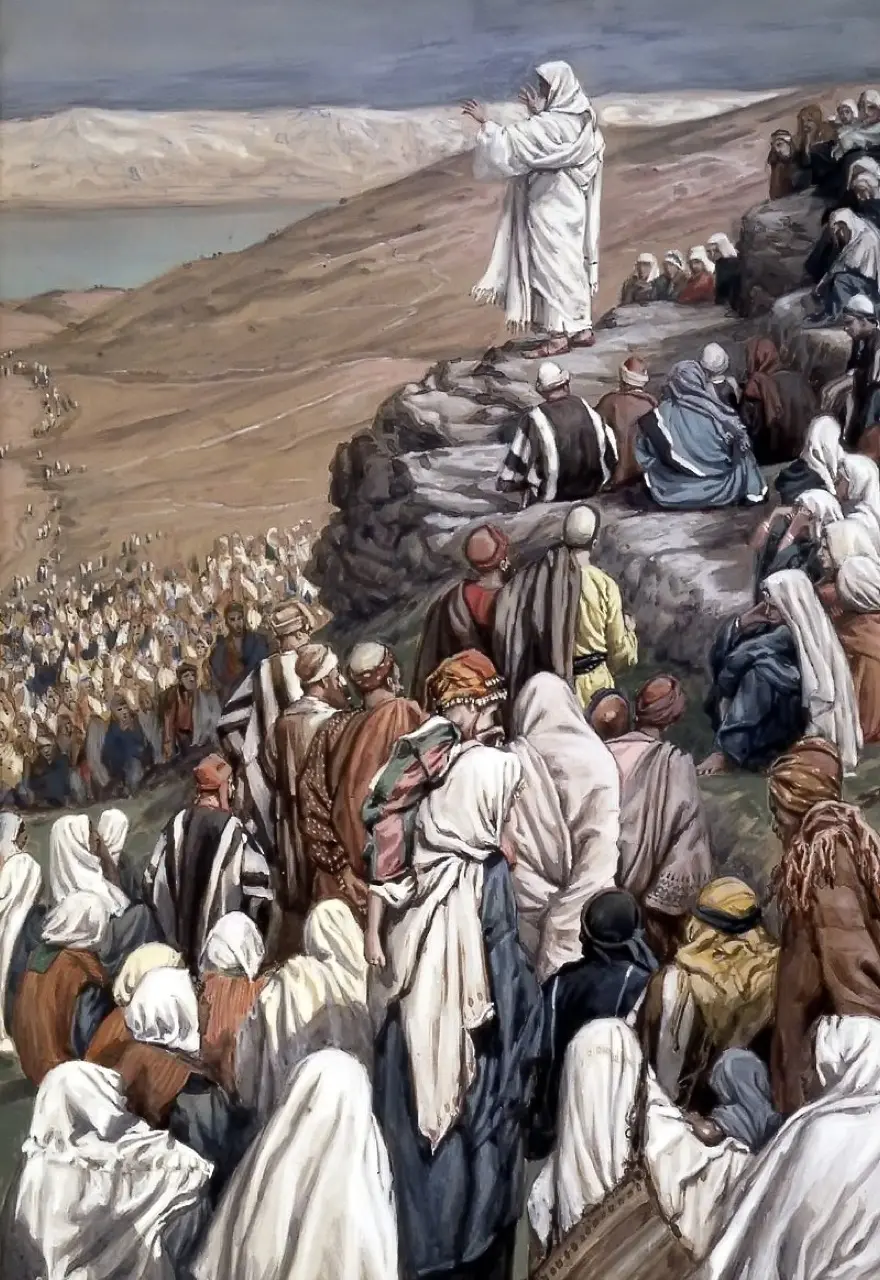
Matthew sets the scene in the verses right before this passage. Jesus has been walking through Galilee, teaching in synagogues, announcing the kingdom, and healing the sick (Matthew 4:23). Large crowds now follow him from across the region (Matthew 4:25). He sees those crowds, goes up a mountain, and sits down. His disciples come to him, and he begins to teach (Matthew 5:1-2).
Matthew does not name the mountain. Tradition places it on a hillside near the Sea of Galilee, but no one can say for sure. Many scholars point out that Jewish teachers of the time often sat to teach, so the posture tells you a formal lesson is starting.
These sixteen verses open a much longer teaching that runs through Matthew 7. If your group wants the whole picture first, this summary of the Sermon on the Mount walks through all three chapters. For tonight, the opening is enough.
What to notice
Here are the eight Beatitudes at the center of the passage. Your group has already heard them once. Read them again slowly before you look at the details.
3“Blessed are the poor in spirit, for theirs is the kingdom of heaven.
4“Blessed are those who mourn, for they shall be comforted.
5“Blessed are the meek, for they shall inherit the earth.
6“Blessed are those who hunger and thirst for righteousness, for they shall be satisfied.
7“Blessed are the merciful, for they shall receive mercy.
8“Blessed are the pure in heart, for they shall see God.
9“Blessed are the peacemakers, for they shall be called sons of God.
10“Blessed are those who are persecuted for righteousness’ sake, for theirs is the kingdom of heaven.
Who is listening. The disciples come close and Jesus teaches them (Matthew 5:1-2). The crowds are near enough to hear, because they react when he finishes (Matthew 7:28). He aims the teaching at followers and lets everyone else listen in.
The first and last promise match. The first Beatitude and the eighth give the same promise, the kingdom of heaven, and both speak in the present tense (Matthew 5:3, 5:10). The six promises between them look ahead to the future (Matthew 5:4-9). The kingdom holds the whole list together like two bookends.
The surprising people. Jesus starts with people who know their own poverty of spirit, people who mourn, and people who are meek (Matthew 5:3-5). None of them looks like a winner. Then he names people who ache for righteousness, show mercy, keep a pure heart, and make peace (Matthew 5:6-9). For a closer look at each line, see the Beatitudes explained.
The switch to you. Through verse 10, Jesus talks about those people. In verse 11 he turns and says you. He tells his disciples that insults and false accusations will come because of him, and that they stand in the line of the prophets when it happens (Matthew 5:11-12).
Salt and light are statements. Jesus does not tell the disciples to become salt or to become light. He says they already are (Matthew 5:13-14). The warnings come next. Salt can lose its taste, and a lamp can end up under a basket (Matthew 5:13, 5:15).
Where the light points. The one command in this part is to let the light shine. Jesus gives the reason: people should see the good works and give glory to the Father in heaven (Matthew 5:16). The works are visible, but the credit goes somewhere else. There is more on that verse in this note on Matthew 5:16.
Discussion questions
Choose the questions that fit your group. You do not need all ten.
- What do you notice about where Jesus is, who comes close to him, and who else is nearby in Matthew 5:1-2?
- Which of the eight groups in Matthew 5:3-10 surprised you most, and why?
- What do the first and last Beatitudes promise, and how does that promise differ from the ones in verses 4 to 9?
- How would you describe a person who is poor in spirit, using your own words and people you have known (Matthew 5:3)?
- What do you think Jesus means when he says that people who mourn will receive comfort (Matthew 5:4)?
- How is making peace different from keeping the peace or avoiding conflict (Matthew 5:9)?
- Why do you think Jesus moves from talking about those people to talking to you in Matthew 5:11-12?
- What does salt do, what does light do, and what do those pictures tell you about how followers of Jesus live among their neighbors (Matthew 5:13-16)?
- Where do you feel the pull to hide your light, and what makes that place hard (Matthew 5:15)?
- Which Beatitude do you most want to grow into this month, and what would one small step look like?
Living it out this week
Pick one. Small and specific works better than large and vague.
- Read the Beatitudes once a day. Matthew 5:3-10 takes about a minute. Notice which line stays with you by the end of the week.
- Show mercy to one person. Think of someone who owes you an apology or a favor. Decide on one act of mercy toward them, in the spirit of Matthew 5:7.
- Make one move toward peace. If you have a strained relationship, take one honest step toward the other person: a message, a call, or a coffee (Matthew 5:9).
- Do one good work quietly. Help a neighbor or coworker in a way they can see. If they thank you, think about how to point past yourself, as Matthew 5:16 describes.
Praying together
Use these as prompts and pray in your own words. Short prayers are fine. So is silence.
- Thank God that the kingdom belongs to the poor in spirit, and tell him plainly where you feel poor (Matthew 5:3).
- Pray for people in your group or your city who are mourning, and ask for the comfort Jesus promises (Matthew 5:4).
- Ask for a growing hunger for what is right, and for mercy toward the people who are hardest to forgive (Matthew 5:6-7).
- Pray for Christians who face insults or harm because of Jesus, near you or far away (Matthew 5:10-12).
- Ask that the good your group does this week would lead people to give glory to the Father (Matthew 5:16).