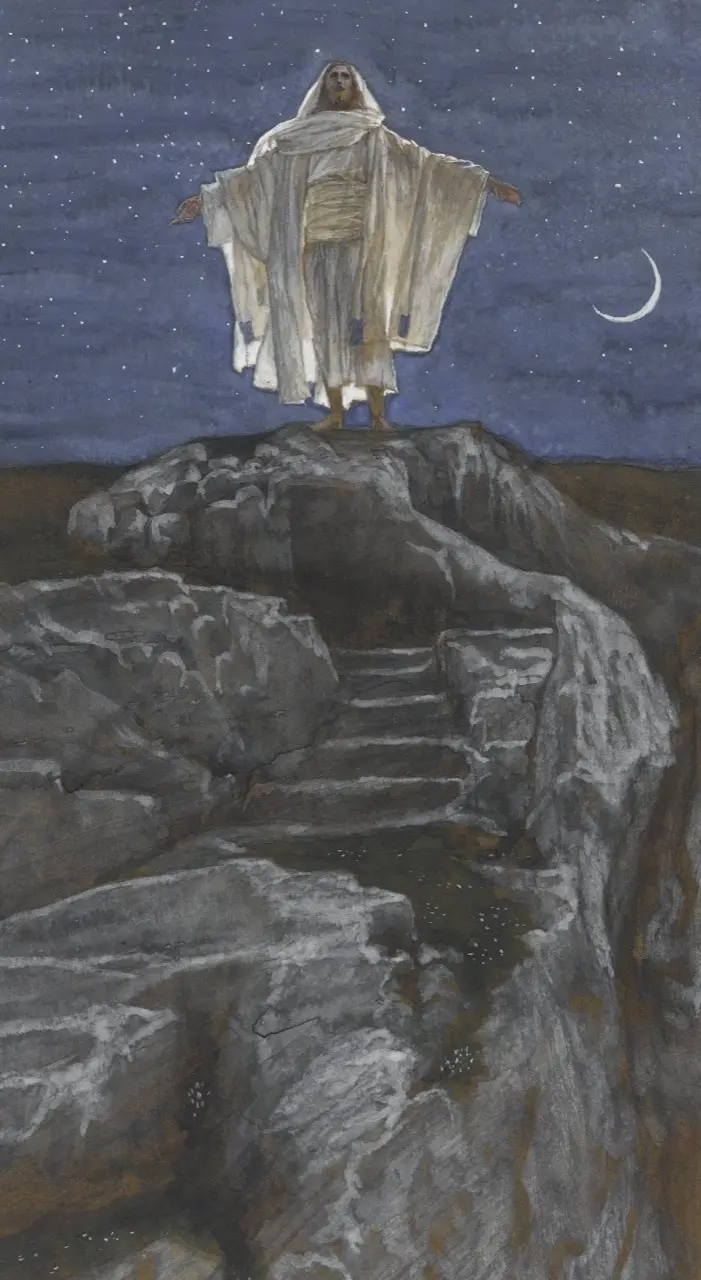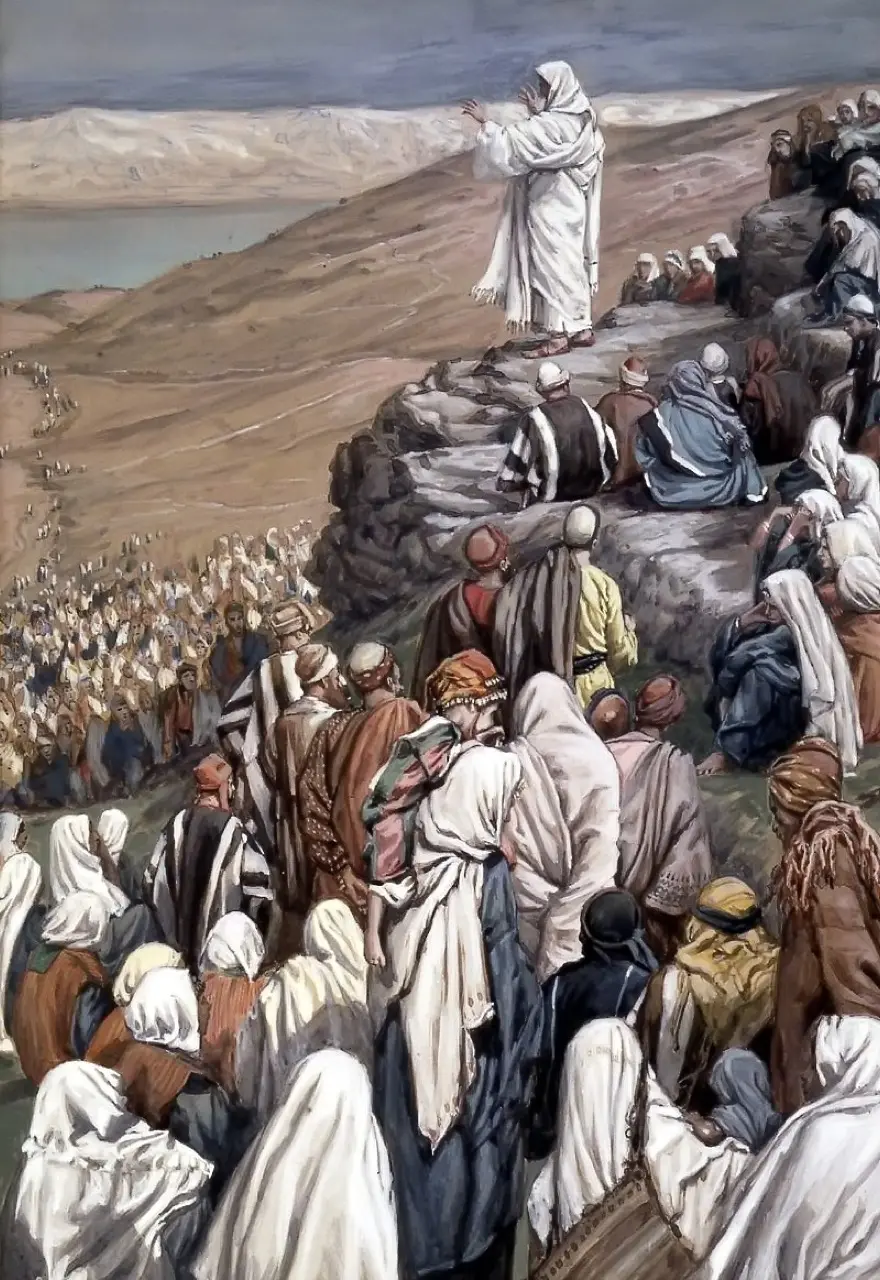
The Sermon on the Mount is the longest stretch of Jesus' teaching in one place, and it fills Matthew 5 to 7. It opens with blessings on the poor in spirit and closes with a story about two houses in a storm. In between, Jesus describes the life of people who belong to the kingdom of heaven. It reads best as one connected sermon, so read it whole before you pull out a favorite line.
In short
Jesus sits on a mountain and teaches his disciples, with the crowds nearby (Matthew 5:1-2).
The sermon moves from the Beatitudes to salt and light, the law, prayer, money, worry, judging, and two ways to live.
Jesus asks for a righteousness that reaches the heart, not only outward behavior (Matthew 5:20).
The closing story of two builders shows that the point is doing these words, not admiring them (Matthew 7:24-27).
What is the Sermon on the Mount?
Matthew sets the scene in two short verses. Jesus sees the crowds, goes up on the mountain, and sits down. His disciples come to him, and he begins to teach. Sitting was the usual posture of a teacher in that setting, so the detail tells you this is instruction, not a passing remark.
1Seeing the crowds, he went up on the mountain, and when he sat down, his disciples came to him.
2And he opened his mouth and taught them, saying:
Notice who stands closest. The disciples come to him, and the crowds listen from nearby. By the end, in Matthew 7:28-29, the crowds marvel at his teaching because he teaches with authority of his own, unlike their scribes. So the sermon speaks first to people who already follow Jesus, but anyone can overhear it.
Luke 6:17-49 holds a shorter sermon with many of the same sayings, set on a level place. Scholars differ on whether the two record one occasion or similar teaching given more than once. Either way, Matthew presents his version as a single, ordered whole.
How does the sermon unfold, section by section?
The sermon has a clear shape. It starts with who the disciples are, moves to how they live, and ends with a choice. Here is an outline you can keep beside your Bible.
| Passage | What Jesus teaches |
|---|---|
| Matthew 5:3-12 | The Beatitudes: blessing on the poor in spirit, the mourning, the meek, the merciful, the persecuted |
| Matthew 5:13-16 | You are salt and light, so let your good works point people to your Father |
| Matthew 5:17-20 | Jesus comes to fulfill the Law and the Prophets, not to abolish them |
| Matthew 5:21-48 | Six contrasts on anger, lust, divorce, oaths, revenge, and love for enemies |
| Matthew 6:1-18 | Giving, prayer, and fasting done for God, not for an audience, with the Lord's Prayer at the center |
| Matthew 6:19-34 | Treasure in heaven, one master, and freedom from worry: seek first the kingdom |
| Matthew 7:1-12 | Judging others, asking the Father for good gifts, and the Golden Rule |
| Matthew 7:13-27 | Two gates, two trees, two kinds of followers, two builders |
An outline of Matthew 5 to 7
The Beatitudes come first, and the order matters. Jesus blesses people before he asks anything of them. The post on the Beatitudes explained walks through each one. Salt and light follow in Matthew 5:13-16, a picture of how that blessed life shows up in the world.
The six contrasts in Matthew 5:21-48 follow a pattern. Jesus names a command his hearers already knew, then takes it deeper. Murder becomes anger and contempt. Adultery becomes the look of the eye. Love for a neighbor becomes love for an enemy and prayer for a persecutor.
Chapter 6 turns to motive. Give, pray, and fast where your Father sees, not where people applaud. The Lord's Prayer sits in the middle of this section, in Matthew 6:9-13. Then Jesus talks about money and worry, and the section closes with the call to seek first the kingdom of God in Matthew 6:33.
Chapter 7 gathers several threads. Jesus warns against judging others while ignoring your own fault. He invites you to ask, seek, and knock. Matthew 7:12 sums up the Law and the Prophets in one rule: treat others the way you want them to treat you. Then the closing section sets two paths side by side, four times over.
What is Jesus asking his followers to do?
In Matthew 5:20, Jesus tells his disciples that their righteousness must go beyond the righteousness of the scribes and Pharisees. Those groups took the law seriously. So Jesus is not asking for more rule keeping. He wants the inside to match the outside. Anger, desire, honesty, and love all sit in the heart before they reach the hands.
Matthew 5:48 sets the bar high: be perfect, as your heavenly Father is perfect. The word points to wholeness and maturity, and the verse follows directly from Jesus' call to love enemies the way the Father sends rain on everyone. Read it with Matthew 5:43-47 and you can see what kind of perfection Jesus means.
The sermon also assumes a relationship. Jesus keeps calling God your Father, more than a dozen times across these chapters. The demands come from a Father who sees in secret, feeds the birds, and gives good gifts (Matthew 6:4, 6:26, 7:11). That changes how the commands land.
Why does it end with two builders?
Jesus could have closed with a summary of his teaching. Instead he tells a short story. Two men build houses. The same rain, floods, and wind hit both. One house stands and the other falls.
24“Everyone then who hears these words of mine and does them will be like a wise man who built his house on the rock.
25And the rain fell, and the floods came, and the winds blew and beat on that house, but it did not fall, because it had been founded on the rock.
26And everyone who hears these words of mine and does not do them will be like a foolish man who built his house on the sand.
27And the rain fell, and the floods came, and the winds blew and beat against that house, and it fell, and great was the fall of it.”
Both builders hear the words. The difference is that one does them. That is the whole point of the ending. The foolish builder was not hostile to Jesus. He listened, and maybe he agreed. He just never built on what he heard.
This is why it misleads to treat the sermon as a collection of inspiring quotes. A line about good works that point to God can look lovely on a wall. Jesus wants it in your week. The storm in the story does not ask what you admired. It tests what you built on.
How can you read it as one sermon?
Start by reading all three chapters in one sitting. It takes less time than you might expect, and you will catch connections that piecemeal reading hides. The worry in Matthew 6:25-34 follows right after the warning about two masters. The Golden Rule follows right after God's good gifts.
Then slow down and take one section a day. A few questions help:
- Who is Jesus speaking to here, and what does he call them?
- What did his hearers already know, and what does Jesus add?
- What would doing this look like this week, in one specific place?
Keep the surrounding verses in view as you go. The guide to reading a verse in its context shows how. And notice where you resist. The sermon is meant to press on real life, and the places it presses are worth writing down.