The parable of the prodigal son in Luke 15:11-32 is a story about a father and two sons. It starts with a younger son who wastes his share, but it ends with the father standing outside, pleading with the older son to join the party. Jesus tells it because religious leaders grumbled that he welcomed sinners and ate with them (Luke 15:1-2). You find the meaning in both sons, and in the father who goes out to each.
In short
Jesus tells the parable to answer the complaint in Luke 15:2 that he receives sinners and eats with them.
The father runs to the younger son and gives him a robe, a ring, and shoes before the son finishes his apology (Luke 15:20-24).
The older son refuses to join the celebration, and the father goes out to plead with him too (Luke 15:28-32).
The story ends without saying whether the older son goes in.
What is the prodigal son meaning, and why did Jesus tell it?
Luke 15 opens with a crowd. Tax collectors and sinners come close to hear Jesus, and the Pharisees and scribes grumble about it. Their complaint in Luke 15:2 is that he receives sinners and eats with them. The whole chapter answers that complaint.
Jesus tells three stories. A shepherd leaves his flock to find one lost sheep (Luke 15:3-7). A woman sweeps her house to find one lost coin (Luke 15:8-10). Then a father loses a son. Each story ends in celebration, and twice Jesus says heaven rejoices over one sinner who repents (Luke 15:7, 15:10).
So the third story has two audiences in the room. The tax collectors hear about a son who comes home. The Pharisees hear about a brother who stays outside. Read it only as a warning about a reckless young man and you miss the people Jesus had in front of him. The surrounding verses matter here, the way they do with John 3:16 and the conversation around it.
What did the younger son do?
The story opens with a man who had two sons. The younger one asks for his share now.
11And he said, “There was a man who had two sons.
12And the younger of them said to his father, ‘Father, give me the share of property that is coming to me.’ And he divided his property between them.
13Not many days later, the younger son gathered all he had and took a journey into a far country, and there he squandered his property in reckless living.
Jesus doesn't explain how the request sounded. Many readers think it would have struck his listeners as cold, since a son normally inherited after his father died. Notice what the father does: he divides his property between them (Luke 15:12). The older son gets his share too.
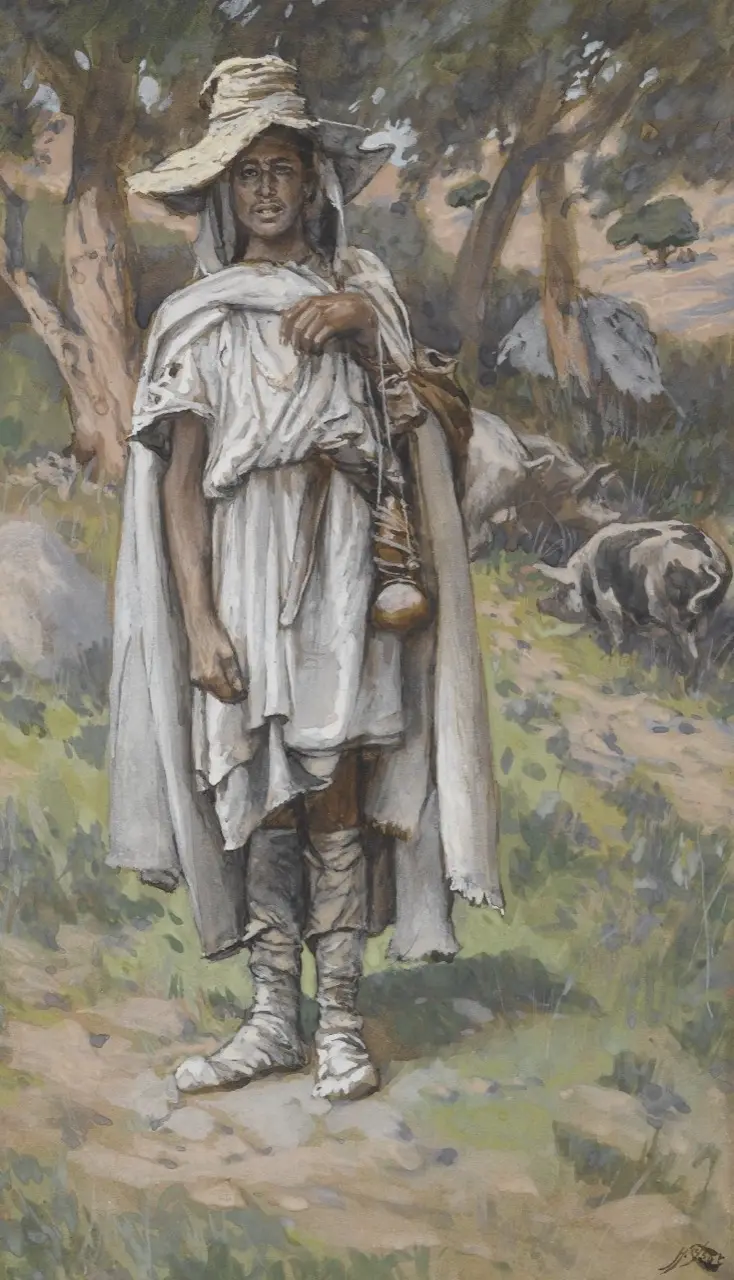
The younger son wastes everything in a far country. A famine comes, and he ends up feeding pigs, hungry enough to want their food (Luke 15:14-16). For a Jewish audience, pigs were unclean, so the picture shows a son about as low as he could go. Then he comes to himself and plans a speech. He will confess his sin and ask to work as a hired servant (Luke 15:17-19). His plan is to earn a place at the edge of the household.
Why does the father run?
This is the turn the whole chapter builds toward.
20And he arose and came to his father. But while he was still a long way off, his father saw him and felt compassion, and ran and embraced him and kissed him.
21And the son said to him, ‘Father, I have sinned against heaven and before you. I am no longer worthy to be called your son.’
22But the father said to his servants, ‘Bring quickly the best robe, and put it on him, and put a ring on his hand, and shoes on his feet.
23And bring the fattened calf and kill it, and let us eat and celebrate.
24For this my son was dead, and is alive again; he was lost, and is found.’ And they began to celebrate.
The father sees his son while he is still a long way off, which suggests a man who has been watching the road. He feels compassion, and he runs. Many commentators note that an older man running in public would have looked undignified in that culture. Either way, he doesn't wait for his son to arrive and explain himself.
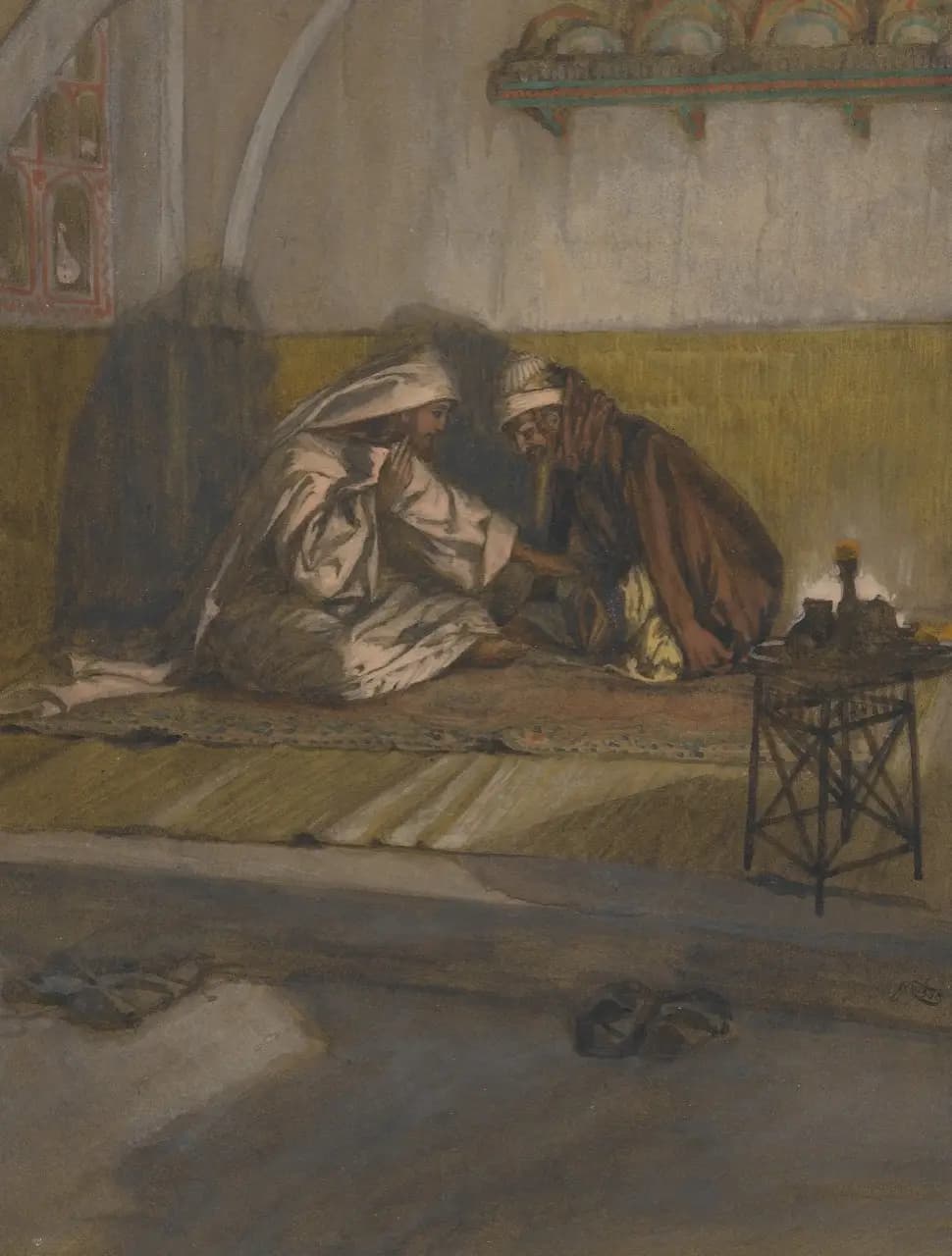
The son gets through his confession in Luke 15:21. Then the father cuts in before the part about becoming a hired servant. He calls for the best robe, a ring, and shoes. Servants often went barefoot, so many readers take the shoes as a sign that he comes back as a son. Then comes the fattened calf, kept for a big feast.
The father gives his reason in verse 24: his son was dead and is alive, was lost and is found. Those are the words Jesus used for the sheep and the coin. The welcome comes before the son proves anything, which fits what Paul writes in Romans 5:8 about love shown while people were still sinners.
Why is the older son angry?
Many retellings stop at the party. Jesus doesn't. The older son comes in from the field, hears music, and learns that his brother is home and the calf is on the fire (Luke 15:25-27). He refuses to go in.
28But he was angry and refused to go in. His father came out and entreated him,
29but he answered his father, ‘Look, these many years I have served you, and I never disobeyed your command, yet you never gave me a young goat, that I might celebrate with my friends.
30But when this son of yours came, who has devoured your property with prostitutes, you killed the fattened calf for him!’
31And he said to him, ‘Son, you are always with me, and all that is mine is yours.
32It was fitting to celebrate and be glad, for this your brother was dead, and is alive; he was lost, and is found.’”
Listen to how he talks. He has served for years and never disobeyed. He never got even a young goat for his friends. He doesn't say my brother. He says this son of yours, and he adds a charge about prostitutes the earlier verses never mention (Luke 15:30). He has been home the whole time, yet he sounds as far from his father as his brother was.
Now watch the father. He went out to the road for one son, and he comes out to the courtyard for the other. He entreats him and calls him son. Everything I have is yours, he says (Luke 15:31). Then he corrects one phrase. This son of yours becomes this your brother.
Here the story meets the grumbling in Luke 15:2. The older son stands where the Pharisees and scribes stand: faithful in their own eyes, and offended by the welcome. The father doesn't throw him out. He pleads with him.
How does the story end?
It doesn't, quite. Jesus never says whether the older son went in. The last words belong to the father, and the music is still playing. Most readers take the open ending as an invitation to the Pharisees listening that day, and to anyone who sees themselves in the older brother.
Christians read the parable with different emphases. Some focus on repentance, some on the father as a picture of God's grace, and some on Jesus defending his meals with sinners. The text can hold all three. It can't hold a reading that leaves the older son out.
A few questions to bring next time you read it:
- Which son do you find easier to understand?
- What does the father give each son that the son never asked for?
- Whose homecoming would you find hard to celebrate?
The father's patience with both sons echoes the love Paul describes in 1 Corinthians 13, a love that keeps no record of wrongs and goes out to the angry as well as the ashamed.